
Italian Cotton vs Egyptian Cotton: Which One Is Right for You?
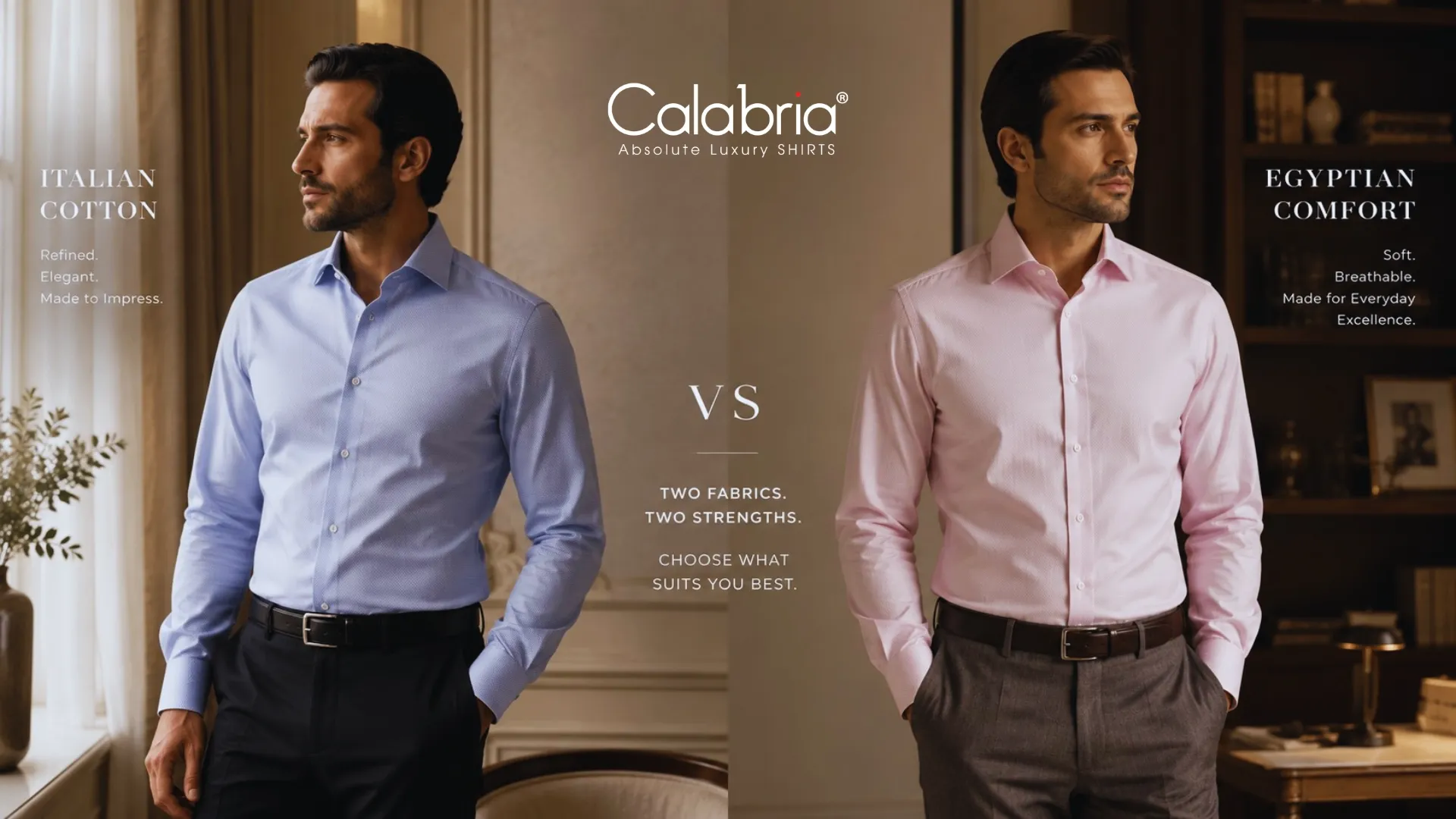
If you’ve already decided a standard formal shirt isn’t cutting it anymore, you’ve likely run into two names again and again while shopping in Pakistan: Italian cotton and Egyptian cotton. Both carry a premium reputation. Both cost noticeably more than an ordinary shirt. And both are genuinely worth that extra cost, just not for identical reasons, and not necessarily for the same person or the same occasion.
This isn’t a case of one fabric simply being “better” than the other. It’s a case of two different strengths, developed through two different processes, solving two slightly different problems for a man building his formal wardrobe. Here’s the honest, detailed breakdown of what separates them, and which one actually fits what you’re looking for.
Key takeaways before we go deep:
- Egyptian cotton’s advantage comes from the raw fiber itself, exceptionally long-staple cotton that produces a finer, stronger, more durable yarn
- Italian cotton’s advantage comes from the manufacturing process, spinning and weaving techniques refined over centuries that produce an even finer yarn and a more refined drape
- Egyptian cotton typically suits daily professional rotation, Italian cotton typically suits higher-stakes occasions where the fabric itself needs to make an impression
- Neither is a downgrade from the other, they answer different dressing needs at different price points
- Many well-dressed men in Pakistan keep both in their wardrobe, using each for what it does best
What Is Egyptian Cotton?
Egyptian cotton refers to cotton grown primarily in the Nile River Delta, prized for one specific structural trait: exceptionally long-staple fibers. Staple length, how long each individual cotton fiber is, is the single biggest factor determining how a cotton fabric will look, feel, and perform over time. Egypt’s growing conditions, climate, soil, and irrigation from the Nile, consistently produce some of the longest cotton staples in the world.
Longer fibers spin into finer, stronger, more consistent yarn than short-staple cotton. That yarn, in turn, weaves into a denser fabric with a naturally soft hand feel and a subtle sheen, without needing heavy chemical finishing to look presentable. It’s also more resistant to pilling and thinning through repeated washing, which is exactly why a genuine Egyptian cotton shirt still looks sharp after a hundred washes while a standard cotton shirt from the same era usually doesn’t.
What Is Italian Cotton?
Italian cotton is defined differently. It isn’t primarily about where the raw fiber is grown, it’s about how the fiber is spun, woven, and finished. Italy has centuries of textile manufacturing heritage behind it, and that heritage shows up as a set of production standards: finer yarn counts, denser and more precise weaving, and finishing techniques that produce a natural drape without relying on starch or synthetic stiffening agents.
In practice, this means Italian cotton often starts with high-quality cotton fiber, sometimes even Egyptian-grown cotton, and applies an additional layer of manufacturing precision on top of it. The result is a fabric that feels cooler and smoother against the skin, falls with a more tailored silhouette straight off the rack, and carries a level of refinement that’s difficult to replicate without that specific manufacturing tradition.
Where the Fabrics Actually Come From
It’s worth being precise about this distinction, because it’s the root of every other difference between the two:
- Egyptian cotton is a fiber classification. It describes the raw cotton itself, defined by its growing region and staple length.
- Italian cotton is a manufacturing classification. It describes a spinning, weaving, and finishing standard, not necessarily a specific cotton-growing region.
- The two are not mutually exclusive. High-grade Egyptian fiber can, in principle, be processed using Italian manufacturing techniques, though most commercial shirt collections, including Calabria’s, keep the two distinct so buyers know precisely what they’re paying for.
- Price generally reflects total production cost, not just fiber quality. Italian cotton’s additional processing steps are typically why it sits at a higher price point than Egyptian cotton shirting, even when both use genuinely premium raw materials.
How the Difference Actually Shows Up When You Wear It
| Egyptian Cotton | Italian Cotton | |
| Core strength | Long-staple fiber, natural durability | Precision spinning and weaving |
| Hand feel | Soft, natural sheen | Smooth, cool, refined |
| Drape | Structured, holds shape well | Naturally fluid, tailored fall without starch |
| Ideal use case | Daily professional wear, office rotation | Occasions where the fabric itself needs to make an impression |
| Typical price in Pakistan | Rs. 3,295 to Rs. 4,895 | Rs. 5,495 and above |
Neither column is the “correct” one. They answer different questions a wardrobe needs answered.
Why This Matters More in Pakistan’s Climate Than Almost Anywhere Else
Fabric quality shows up faster in hot, humid conditions than it does in cooler climates. A shirt made from short-staple cotton with heavy chemical finishing tends to lose its crispness by early afternoon in Karachi’s heat, the finish essentially sweats out. Both Egyptian and Italian cotton perform meaningfully better here, not because of marketing, but because their finer, denser weaves allow air to circulate through the fabric while still holding structure. That’s the practical reason serious dressers in Pakistan gravitate toward one of these two fabrics once they’ve had a standard cotton shirt wilt on them in a client meeting or a wedding function.
Which One Is Actually Right for You?
Choose Egyptian cotton if
You’re building out or refreshing a working wardrobe of formal shirts you’ll wear several days a week. You want a shirt that’s noticeably, measurably better than a standard cotton shirt in every practical sense: softer, more breathable, longer-lasting, without paying the additional premium that Italian manufacturing precision commands. This is the fabric for the man who wants genuine quality behind his shirt rather than a story attached to it.
Calabria’s Egyptian Comfort collection is built entirely around this fiber, priced from Rs. 3,295.
Choose Italian cotton if
You’ve reached a point in your dressing, or your career, where the shirt itself is expected to carry weight before you say a word. Board meetings, client pitches, formal events, the moments where the fabric’s refinement becomes part of the impression you make. This is less about daily rotation and more about the handful of pieces in your wardrobe that need to be unmistakably a step above everything else in the closet.
Calabria’s Casa Calabria collection is built for exactly this, from Rs. 5,495.
A practical note for a lot of men: these two aren’t mutually exclusive, and thinking of them as competing choices is often the wrong frame entirely. Many well-built professional wardrobes work best with both in rotation, Egyptian Comfort for the four or five days a week of ordinary office dressing, Casa Calabria reserved for the days that specifically call for it. You don’t need to pick a single fabric identity for your whole closet, you need the right fabric for the right day.
How to Check What You’re Actually Buying
Labels alone don’t always tell the full story, especially with unbranded or lower-tier retailers claiming “Egyptian” or “Italian” cotton without much behind the claim. A few practical checks before you buy:
- Feel the fabric before checking the price tag. Genuine long-staple cotton feels smooth and slightly cool to the touch immediately. If a shirt feels stiff, waxy, or unusually crisp on the shelf, that’s often surface finishing compensating for a coarser base fabric underneath.
- Hold the fabric up to light and check weave density. A denser, finer weave lets light through more evenly. A looser, coarser weave shows visible gaps between threads.
- Ask specifically about the wash guarantee. A brand confident in its fabric quality will commit to a defined number of washes before noticeable fading or thinning. Vague or absent claims here are worth noticing.
- Check the collar and cuff stitching closely. These areas take the most wear, and lower-grade cotton typically shows fraying or thinning at these seams first, well before the rest of the shirt does.
- Compare the price against the category, not just the competition. If a shirt is priced like premium Italian cotton but costs less than most genuine Egyptian cotton shirts in the market, that’s a signal worth questioning before you buy.
Frequently Asked Questions
Is Italian cotton always better than Egyptian cotton?
Not necessarily better, different. Egyptian cotton’s advantage comes from long-staple fiber and natural durability, ideal for daily professional wear. Italian cotton’s advantage comes from the precision of its spinning and weaving process, producing a finer yarn and a more refined drape, which is why it typically sits at a higher price point.
Can Italian cotton and Egyptian cotton be combined in the same shirt?
Yes, in principle. Some manufacturers blend high-grade Egyptian fiber with Italian spinning and weaving techniques. Most collections, including Calabria’s, keep each fabric distinct so the buyer knows exactly what they’re getting and paying for.
Which fabric holds up better in Pakistan’s heat?
Both perform significantly better than standard cotton, since their fine, dense weaves allow airflow while holding structure. Egyptian cotton’s natural breathability and Italian cotton’s refined weave both outperform standard cotton in hot, humid conditions.
Do I need to choose only one fabric for my wardrobe?
No. Many professionals keep Egyptian cotton shirts in daily rotation and reserve Italian cotton for higher-stakes occasions, using both fabrics for what they’re each best suited to rather than treating it as an either-or decision.
Why is Italian cotton more expensive than Egyptian cotton if both are premium?
The price difference generally reflects the additional manufacturing precision involved. Egyptian cotton’s cost reflects the value of the raw fiber itself. Italian cotton’s cost reflects both fiber quality and an added layer of specialized spinning, weaving, and finishing that most manufacturers outside Italy don’t replicate at the same standard.